
The Hidden Carbon Costs of How We Manage Our Gardens
Left alone, your yard would gradually accumulate carbon — in plant roots, woody stems, decomposing leaves, and the soil biology that turns all of that into stable long-term storage. The moment we start managing a landscape, we start making choices that either support that process or work against it.
This post walks through the main ways our maintenance and design choices affect a garden's carbon balance, and what we can actually do about them. The previous two posts in this series covered how plants store carbon and how soil stores carbon. This one is the practical one.
The Other Carbon Story: Why Soil Matters as Much as the Plants Above It
In the first post in this series, we traced the path of carbon from the atmosphere into the physical structure of plants — the sugars, the cellulose, the lignin-rich wood that makes a tree trunk both strong and carbon-dense. But as impressive as a mature tree is as a carbon vault, it's actually the soil beneath it that holds more. Roughly 60% of the carbon stored in a landscape is underground. More importantly, carbon stored in the soil tends to stay stored — stable for centuries or millennia rather than decades. Knowing how that happens, and what undoes it, changes the way you think about managing a garden.
Carbon Storage in the Garden: It Starts With Plants
Every plant in your garden is quietly running a carbon capture operation. Through photosynthesis, plants pull CO2 out of the atmosphere and convert it into the physical stuff of life — leaves, roots, wood, flowers, seeds. Some of that carbon is stored for decades. Some of it feeds an underground economy that locks carbon into the soil for centuries. Understanding how this works changes the way you think about what to plant, how to manage your garden, and why it all matters.
Understanding Water Balance: Why Planting Timing Matters
Plant establishment success hinges on one critical factor: consistent soil moisture during the months when roots are actively growing and establishing in their new location. While you can provide supplemental water any time of year, Charlotte's natural seasonal moisture patterns mean strategically choosing when to plant can dramatically reduce the irrigation effort required—and increase your plants' success rate.
Why Fall and Winter Planting Makes Sense
You've probably heard that fall is the best time to plant. But why, exactly? Sure, the weather's more comfortable and you're not battling summer heat. But there's a deeper reason—one that has to do with how plants make decisions about where to send their energy. Understanding this helps explain why plants installed from fall through late winter establish more easily than spring plantings, and why winter planting actually works despite the cold weather.

Flower Shape and Pollinators
Several weeks ago, we looked at how flower color influences pollinator choice. This month, we’ll dive into flower shape and why it matters.
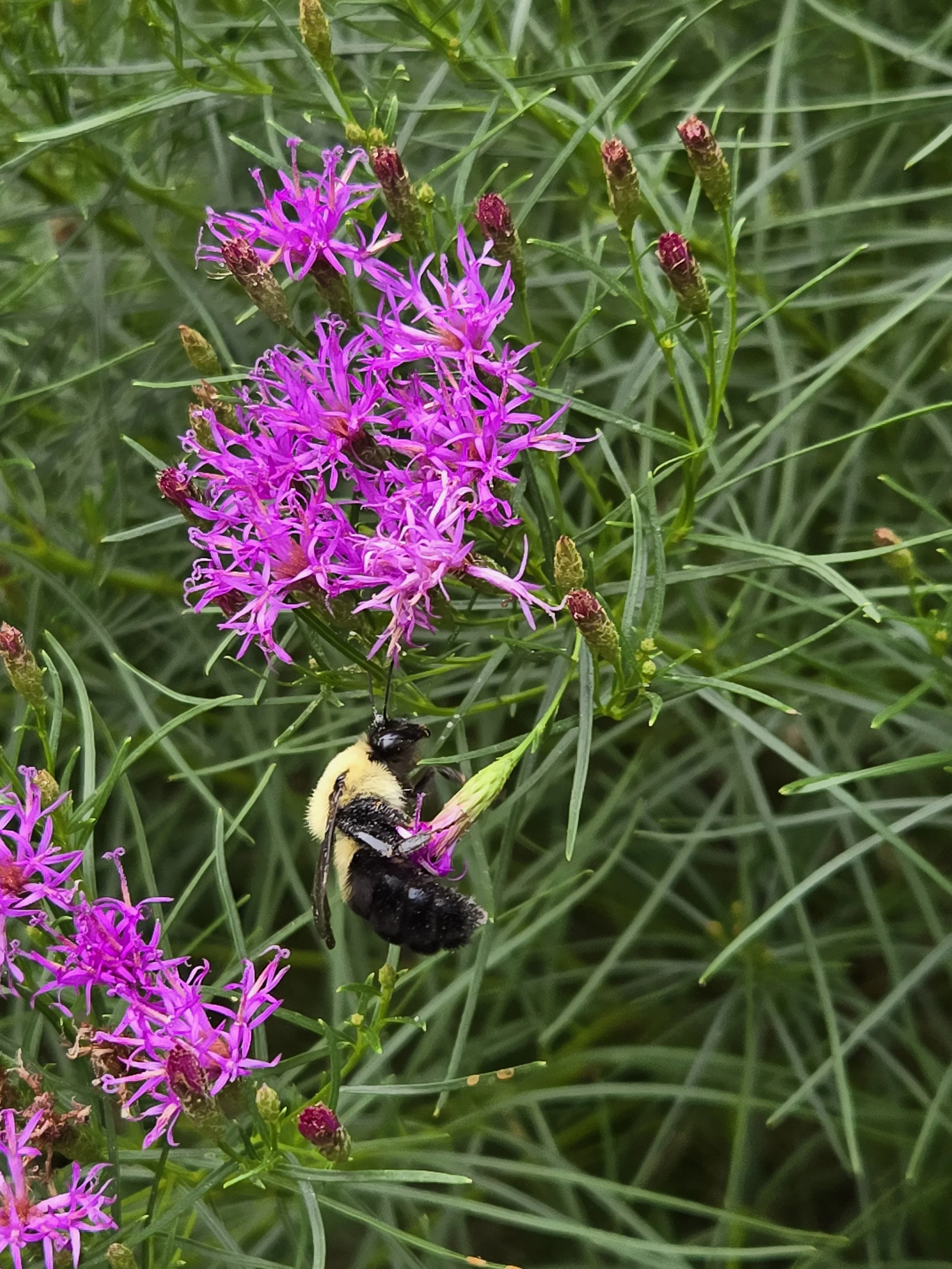
Flower Colors and the Pollinators They Attract
Have you ever walked through the garden and wondered why some flowers draw in bees while others seem to be hummingbird favorites? Or why so many native flowers are yellow, lavender, or purple, while fewer are red, and almost none are green or brown? The two questions are related.
Flowers and pollinators have co-evolved in a mutually beneficial partnership. Over millions of years, flowers developed their colors, shapes, and scents to attract the right pollinators. Each pollinator brings different abilities: they vary in size, tongue length, food needs (nectar, pollen, or both), and how they see or smell the world.
Heat Stress and Plant Growth
Gardeners in the Southeast know from experience that summer heat can be punishing. We also know—sometimes the hard way—that it's best to avoid installing new plants or building out beds during the hottest months. Anyone who’s planted something in July only to watch it fade quickly knows the feeling (I’ve done this more than I care to admit).
In this article, I’d like to take a deeper look at why plants suffer in summer heat—what’s happening inside the plant—and what that stress is trying to tell us. Understanding the why behind heat stress can help us better care for both established plantings and any new additions, even if they go in during less-than-ideal conditions.
How Plants Grow: A Quick Primer
Before diving into heat stress, we need to briefly review three key physiological processes in plants: photosynthesis, respiration, and transpiration. These are the basic systems that drive growth and survival.

The Food Web Simplified
When thinking about how plants and wildlife interact, we often hear the terms food chain and food web. A food chain is a specific sequence of organisms through which energy and nutrients pass as one organism eats another (e.g., Grass → Grasshopper → Frog → Snake → Hawk), while a food web is a complex network of interconnected food chains.
Aggressive vs Invasive: Why the Distinction Matters
Language matters. We often use words interchangeably that seem similar but carry important distinctions. One common mix-up I hear, even among experienced gardeners and clients, is between the terms “aggressive” and “invasive.”
Garden as a Process: Working with Nature
In our task-driven lives, it’s tempting to treat everything like a checklist. Paint the room. Clean the garage. Done. But gardens aren’t like painted walls. They’re not static, finished projects. Gardens live, breathe, grow, and change—sometimes in ways we don’t expect.
Instead of trying to control every aspect, what if we approached the garden as a process?

Lessons From The Garden
There are a lot of reasons people have for gardening. For most, it gives them a chance to be outside, add some beauty to their yard, improve the environment, or grow food that tastes good. Those are all reasons that I enjoy working in a garden…whether it is mine or yours. On the most basic level, we could lump all of those into one reason…it gives us pleasure. Over the years, I have found a few side benefits from gardening that have helped me be happier at a deeper level. Working in the garden is great for helping us to accept change, deal with imperfection, and build patience.

What I Love Most About a Garden in the Spring
While Fall is the best time for planting (in the south), Spring to me is the time I most enjoy walking around a garden. The weather is cool, there are no mosquitos and moisture levels are high enough that you don’t have to worry about watering anything except the most recently planted plants.

Spring Don’t Do’s To Save Time and Money
With Spring just around the corner, I wanted to share a few landscaping best practices, which are contrary to what we often see, but will hopefully save you time and/or money….

New Old School Tool For Decompacting Soil
Over my first year of gardening for other people, one of the biggest internal conflicts I have had is how to balance the need to amend and de-compact urban soils vs minimizing disturbance of the existing soil which has the potential to ruin soil structure and reinvigorate the seed bank (causing previously dormant seeds to germinate and cause weed issues).

When plants are suffering in late summer, how do you know they are ok?
This was a question posed to me by a client for whom I did an installation for this spring and am providing follow on maintenance. By mid August, the Amsonia ‘Blue Ice’ that we had planted for him was starting to look a bit ratty after 2 months of high temperatures and alternating between dry and wet conditions. It’s leaves were either dropping or folded tight upwards to the stem.

Prolong Bloom Season By Planting in Multiple Locations
One of the downsides to using perennials vs annuals is the shorter bloom season.

Cardinal Flower: Natural Hummingbird Feeder
For those of you who love hummingbirds and have a moist to wet spot in your garden, consider adding Cardinal Flower (Lobelia cardinalis) to your garden.

Flopping Plants Have You Down?
As we are approaching mid-Summer and the taller herbaceous are approaching full size (5-10’), gardeners often experience issues with plants flopping over.

What to do about Deer
Summer has gotten off to a hot and dry start this year….although only 3 weeks officially into summer, we’ve had 90+ temperatures and little to no rain for most of the past 6 weeks. As bad as it is for our gardens, it’s even dryer when you move away from our artificially watered backyards. This means that deer are extra hungry due to reduced plant growth…